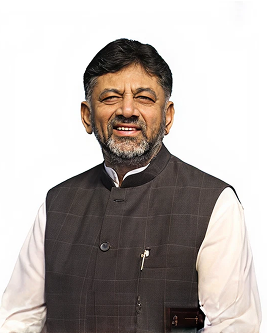
SHRI D.K. SHIVAKUMAR
Hon'ble Chief Minister
Govt. of Karnataka
 JeevasarthakatheHealth and Family Welfare DepartmentGovernment of Karnataka
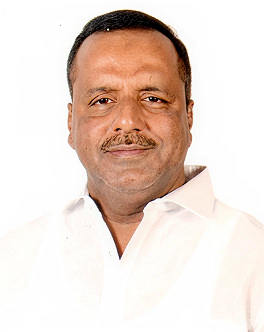
SHRI U.T. KHADER FAREED
Hon'ble Minister of Health & Family Welfare
Govt. of Karnataka
Frequently Asked Questions on Organ Donation and Transplantation
About Jeevasarthakathe / SOTTO
Jeevasarthakathe is the State Organ and Tissue Transplant Organisation (SOTTO) of Karnataka. It works under the Health & Family Welfare Department, Government of Karnataka. It coordinates organ donation, maintains the state waiting list, ensures fair and transparent organ allocation, trains hospitals, and creates public awareness. It also implements the Transplantation of Human Organs and Tissues Act (THOTA), 1994.
You can visit our official website www.jeevasarthakathe.karnataka.gov.in to identify the registered transplant centres and contact the nearest transplant hospital, or visit the Jeevasarthakathe (SOTTO) office, or send an email to the official email address jsk.sotto@karnataka.gov.in.
Organ Donation – Basic Information
Organ donation means donating an organ or tissue to save or improve another person's life. Donation can happen after death (deceased donation) or while a person is alive (living donation).
Living donation is when a healthy person donates an organ or part of an organ during their lifetime. Common examples are: - One kidney - A part of the liver - In some cases, bone marrow All living donations are done only after strict medical tests and legal approval as per the THOTA Act.
No. This is illegal. Organs are allocated only based on the **Transplantation of Human Organs and Tissues Act 1994, Rules 2014**. Any such offer or demand should be reported to Jeevasarthakathe.
No. Buying or selling organs is illegal in India under the **Transplantation of Human Organs and Tissues Act 1994, Rules 2014**. It is a cognizable offence.
Yes. Most major religions support organ and tissue donation as an act of kindness and saving lives.
No. All costs related to organ donation are borne by the hospital.
Organ Pledging and Registration
You can pledge your organs online through the Jeevasarthakathe/SOTTO portal, the NOTTO portal or by scanning the QR Code available there. A digital certificate will be generated and it can be downloaded. Even after pledging, your family's consent is required at the time of donation.
Yes. You can update your details through the online portal or by contacting Jeevasarthakathe.
Yes. In India, family consent is mandatory. It is important to inform your family about your wish to donate.
No. Organ allocation is done through a transparent medical system managed by Jeevasarthakathe. Families cannot choose the recipient. After donation, only the recipient's age and gender are shared with the donor family.
You must visit an authorised transplant hospital. After medical evaluation, the hospital will register you in the state waiting list. The list of authorised hospitals is available on the Jeevasarthakathe (SOTTO) portal.
No. Only one active registration is allowed in Karnataka. However, you can transfer your registration from one hospital to another if needed.
You must inform both the current hospital and the new hospital. The hospitals will coordinate and update Jeevasarthakathe.
Commonly required documents include ID proof, medical reports, blood group report, consent forms, and dialysis reports if applicable. Your transplant hospital will guide you in detail.
Only the registered transplant hospital can update medical details. Emergency status is added only after approval by the organ-specific advisory committee.
Immediately contact the hospital where you are registered. Only your registered hospital can confirm eligibility and coordinate the transplant.
Brain Death and Medical Evaluation
Brain-stem death is the permanent and irreversible stopping of all brain functions. It is legally considered death in India.
It is confirmed by an authorised medical board through two mandatory tests at fixed time intervals.
In coma, the brain still functions and recovery may be possible. In brain death, brain function has permanently stopped.
Yes. Many common illnesses do not prevent donation. Each organ is medically assessed.
Yes. Age is not a barrier. Medical condition is the deciding factor.
They should inform the treating hospital or call the organ donation helpline immediately.
Yes. Family consent is mandatory.
The hospital should inform Jeevasarthakathe. Further coordination will be done by the Jeevasarthakathe team.
After natural death, tissues like corneas, skin, and bones can be donated.
Yes. Donation after cardiac death is possible after medical assessment.
Organs and Tissues That Can Be Donated
Organs include heart, lungs, liver, kidneys, pancreas, and intestine. Tissues include corneas, skin, heart valves, bones, tendons, meniscus, and blood vessels.
Living donation is allowed only from close relatives as defined under the THOTA Act, after proper approval. Non-near relatives can also donate after taking approval of the Authorisation Committee.
Yes. It is allowed only after thorough medical and legal evaluation to ensure donor safety.
Organ Allocation and Waiting List
Organs are allocated through a transparent computerised system based on medical criteria.
The computerised system managed by Jeevasarthakathe decides allocation. No manual intervention is allowed.
There is no fixed waiting time. It depends on medical and availability factors.
This can happen only if another patient ahead of you transfers to your hospital.
The portal shows the state-wide list, while the hospital shows the hospital-specific list.
Children can receive organs as per rules. Donation from children is allowed only after brain death and family consent.
Organ Retrieval Process
Usually 24 to 36 hours, depending on the case.
No. The body is respectfully reconstructed after organ retrieval.
Yes. The body is handed over to the family for last rites.
- Heart – about 4 hours - Lungs – about 6 hours - Liver – about 6–8 hours - Kidneys – about 24–36 hours - Tissues – several days
It is a special traffic arrangement to transport organs quickly and safely.
Helpline and Donor Reporting
Yes. The helpline is available round the clock.
Yes. Jeevasarthakathe will coordinate further action.
The Helpline number is **98450 06768**.
Awareness and Volunteering
You can contact Jeevasarthakathe/SOTTO Karnataka through the official email jsk.sotto@karnataka.gov.in.
You can request IEC materials through the helpline or official email.
Yes. Donation volunteers can participate through Jeevasarthakathe-supported programmes.
Eye & Cornea Donation – Frequently Asked Questions
The **cornea**, the main focusing part, is the clear front surface of the eye. Like a window, it allows light to enter. Vision could be markedly reduced or lost if the cornea becomes cloudy or scarred.
Injuries to the eye, birth defects, malnutrition, infections, chemical burns, congenital disorders and complications of eye surgery.
Eye donors can be of **any age group or sex**. People with spectacles, diabetes, high blood pressure or asthma may still donate. People who **cannot** donate include those with: AIDS, Hepatitis B / C, Rabies, Septicaemia, Acute Leukaemia, Tetanus, Cholera, Meningitis or Encephalitis.
The eye bank is a **non-profit organisation** that obtains, medically evaluates and distributes donated eyes for use in cornea transplants, scleral reconstruction, research and education.
Anyone. **Cataract, poor eyesight and age do not prohibit you from becoming a donor.** Please notify your next of kin of your intentions so they can act on them when the time comes.
Eyes restore sight through transplantation, research and education. **Over 90 percent** of the more than 41,300 cornea transplant operations performed each year successfully restore vision.
A cornea transplant is the surgical procedure that replaces a disc-shaped segment of an impaired cornea with a similarly shaped piece of a healthy donor cornea.
A cornea transplant is usually performed **within 4 days** after donation, depending on the method of cornea preservation.
The surgical removal of the eye tissue is performed **soon after death**, ensuring the tissue is in the best possible condition for transplant.
No. Only the **cornea** and the **sclera** (white part of the eye) can be transplanted.
Potential donors are carefully screened for medical suitability and high-risk factors. **HIV, Hepatitis B and syphilis tests** are done before any tissue is released for surgery.
More than **35,000 eyes** are used annually for research and education. Research on glaucoma, retinal disease, complications of diabetes and other sight disorders benefit from eye donations.
No. Donation is a *gift of life or sight* to others — eye, organ and tissue donations are consistent with the beliefs and attitudes of the major religions.
No. Eye tissue is procured within hours of death, so families may proceed with funeral arrangements as planned.
No. **Great care is taken** to preserve the appearance of the donor.
No. It is **illegal** to buy and sell human eyes, organs and tissues.
No. **Donor anonymity is strictly preserved by law.**
Strict laws protect the potential donor. Legal guidelines must be followed before death can be certified, and a physician certifying death **cannot participate** in eye procurement or transplant procedures.
Beyond honouring the deceased's wishes, donation provides comfort: *"Just knowing that a small part of our loved one is going on in life, helping someone see this world, is a consolation."*
Inform your family and legal representative. A **donor card** can serve as an indication to your family, your legal representative and hospitals of your intention to be an eye donor.
Key actions you can take: - Decide to donate your eyes. - Encourage family members to do the same. - Join your local eye-donation centre. - Contact the nearest eye bank promptly after a death in the family. - Motivate others through awareness. - Provide monetary support to eye banks where possible.
- Eyes must be removed within **4–6 hours** of death by a registered practitioner. - Eye removal does **not delay the funeral** — the entire procedure takes only 20–30 minutes. - Donor and recipient identities are kept strictly confidential.
- Gently close the deceased's eyelids. - Turn off ceiling fans near the body. - Raise the head slightly with a pillow. - Contact the nearest eye bank immediately with the address and clear landmarks.
The family receives an **appreciation certificate**. Eye-bank staff evaluate the corneas, conduct serology tests, coordinate with surgeons, place recipients on the waiting list, perform the transplants and conduct follow-up care.
- Round-the-clock staff availability. - Supply of quality, screened corneas to surgeons. - Facilitation of corneal research. - Public awareness campaigns on eye donation. - Training of doctors and technicians. - Building a network of eye-donation centres across the state.